About
M. Dogwood
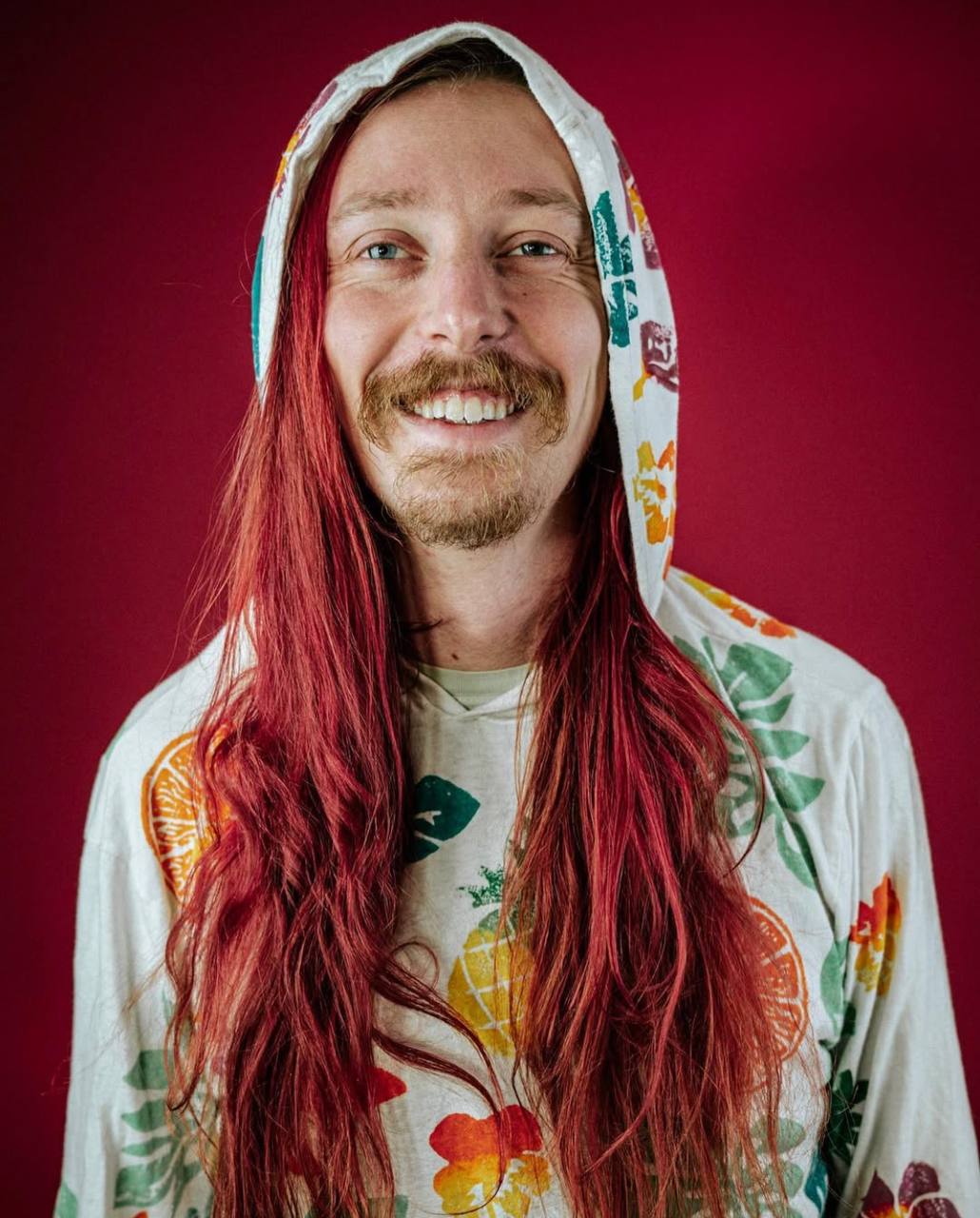
I came out of Brooklyn College in 2016 with a BA in film production. I taught elementary English in China for the next four years and, on the side, founded the Shanghai chapter of the Cacophony Society in 2018. That's where the cultural-production thread started. A hundred-plus events across my two chapters (Shanghai and Christchurch), all formats, small budgets, every event written up and archived.
In 2020 I joined Charged Particles as Community Lead, grew into Executive Creative Director, and eventually became COO across a five-year arc. Charged Particles built smart wallet architecture. Programmable accounts that hold and earn yield from underlying assets, years before account abstraction became standard category language. That era is when I traveled the world representing the team. US, Europe, Asia. Speaking on panels, building HYDRA at ETH Denver, leading content and education work, conceptualizing new use-cases. Then I co-founded Packara, the consumer-facing pack layer that came out of the same thesis. Now Gryps, where I run institutional ecosystem: Tiger 21–style membership architecture, the Chatham House lounge, the positioning and communications work to bring serious allocators on-chain.
The cultural production stayed live alongside. HYDRA at ETH Denver in 2022. The blockchain industry-event playbook taken three levels up. The largest metaverse event ever held in Cryptovoxels, 2021. Whale Whale Whale in New Zealand, January 2026. Led a thirty-person team building one of the main stages for a thousand-person gathering.
Research started in late 2025 and has been daily since April 2026. Multimodal AI for marine mammal monitoring, sitting under Cetacea Foundation. The active build is pyceti-detector, a Python port of Project CETI's MATLAB Coda detector. The longer arc is a methods note, then expanded Foundation work, then the research program it funds.
Plumbline runs the daily writing and tooling thread. A small lab where one Director works with AI agents to ship tools and content. The longer-form analytical work goes on blog.gryps.finance and into essays like "The Retrofit Tax."
How I work
I work at the seam between disciplines. The cetacean acoustic-fusion thesis is structurally identical to the institutional signal-processing problem Gryps solves. The mechanism-design problems in tokenomics map cleanly onto reward-function design in reinforcement learning. The production discipline that makes HYDRA possible is the same discipline that lets Plumbline ship a podcast every day. Cross-domain isn't a slogan. It's how the work compounds.
The Plumbline experiment is the operating model I'm most excited about: one Director working with AI agents on real, public-facing production. Not a productivity tool, not a marketing claim. A small lab that ships, daily, with the AI involvement named.
That's how I'd work on a team, too. Bring the original premises, set the direction, hold the editorial line, make the ethical calls about which platforms and framings to use. Let the agents. And the engineers and designers and the rest of the team. Do what they're better at. The work that ships is work neither side could ship alone.
Reading
Pynchon, DFW, Bolaño. a16z research, Epsilon Theory, Kaiko Research. Stripe Press. The daily arxiv ML papers. Project CETI publications. Earth Species Project. If you want a sense of the editorial register I aim for, look at Stratechery on its precise days and Epsilon Theory on its restrained ones.
Contact
mango@gryps.finance. Severna Park, Maryland. Async, traveling for the conference circuit. NY / SF / Denver when timing makes sense. For the Gryps institutional lounge: gryps.finance↗. For Plumbline: plumbline.tools↗.